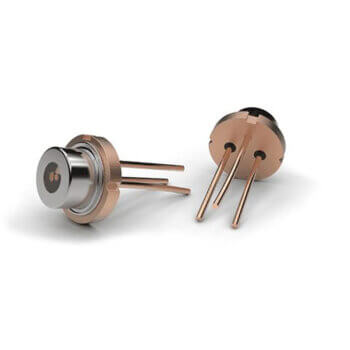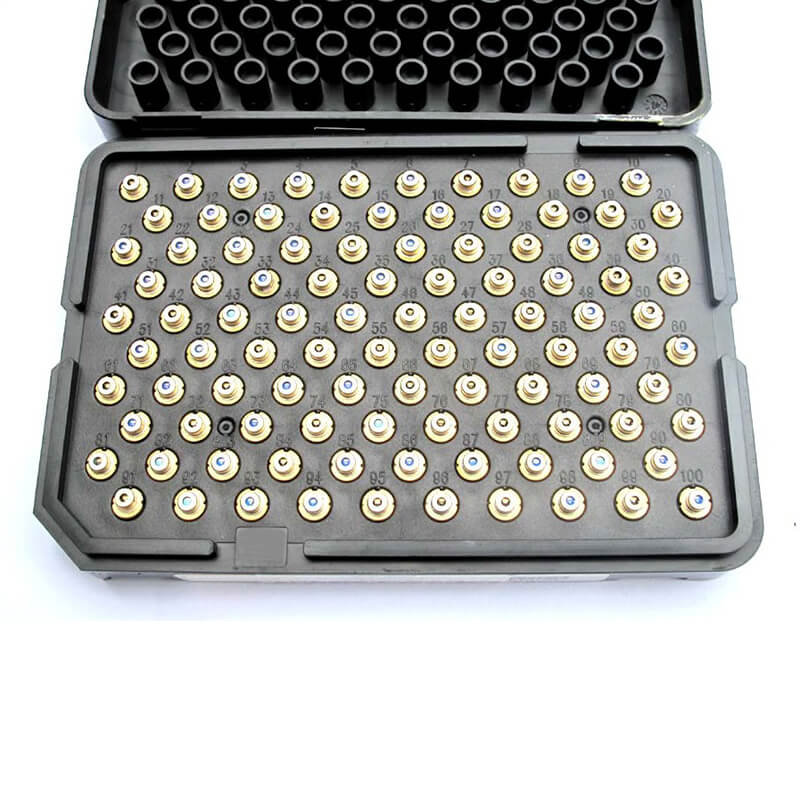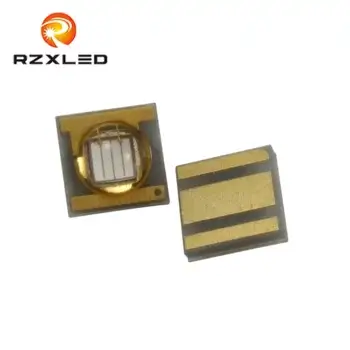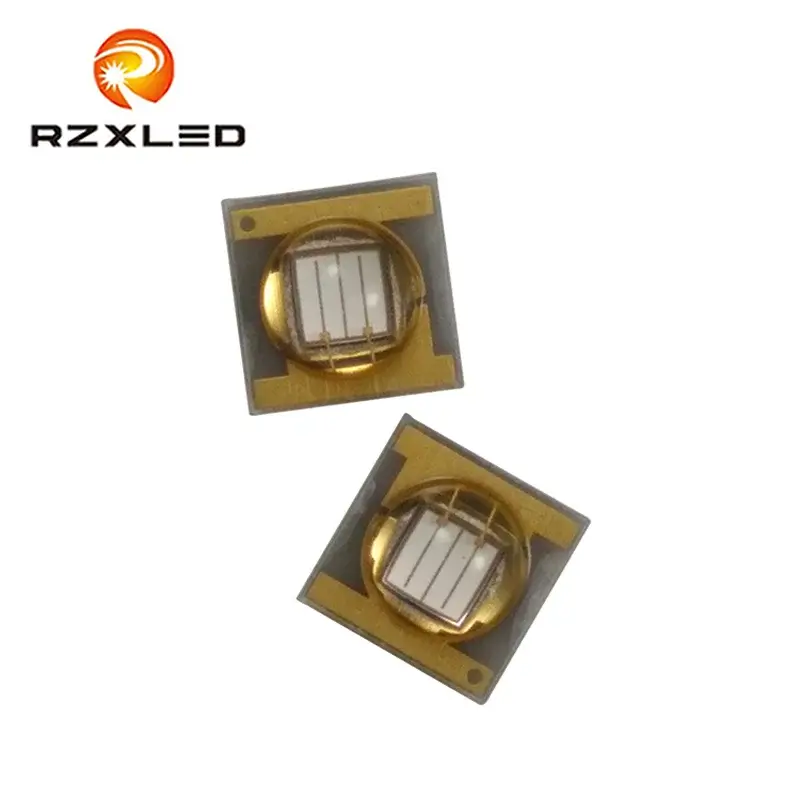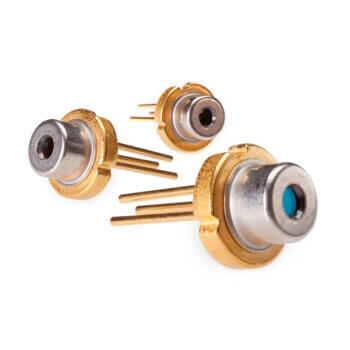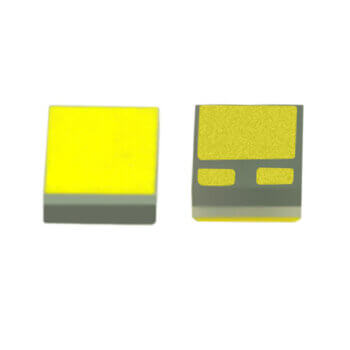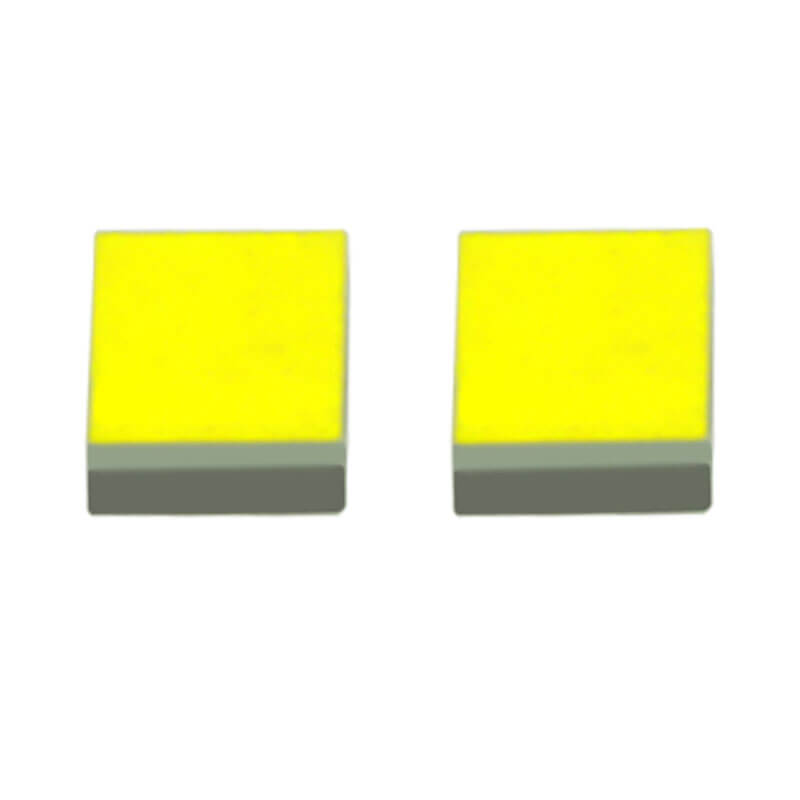
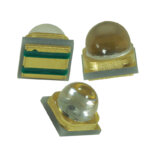
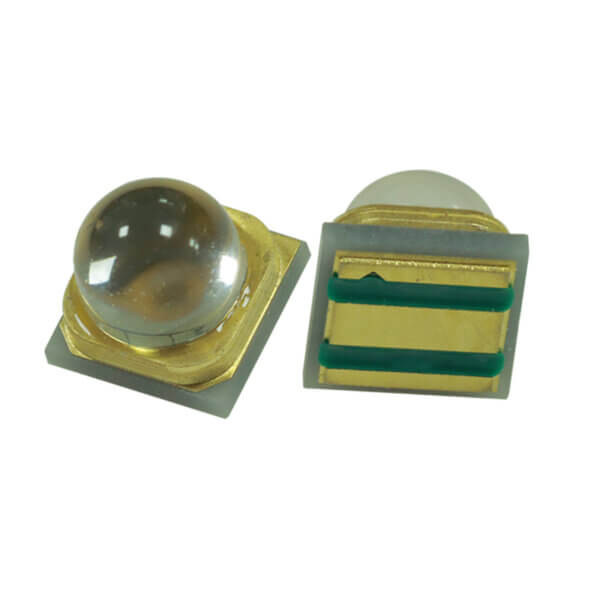

XPE 3535 Infrared Ceramic SMD LED 1050nm 1350nm 1550nm 1650nm LED Chip
Wavelength(NM) Power(w) Voltage(V) Current(mA) MW@350ma
1040-1050NM 3 1.3-1.4V 350-700MA 25-30MW
1550-1560NM 3 0.8-1V 350-700MA 50-55MW
1650-1660NM 3 0.7-0.9V 350-700MA 11-13MW
1050nm, 1550nm, 1650nm infrared rays belong to the short-wave infrared band and are used in the following fields:
Communication field
Fiber-optic communication: 1550nm is a commonly used wavelength for fiber-optic communication. This wavelength has extremely low transmission loss in optical fiber, which can achieve long-distance, high-speed data transmission, such as telecommunications networks, data center interconnection and other scenarios, and is used to carry a large number of communication services such as voice, data, and video. 1650nm can also be used in specific fiber-optic communication systems to expand communication capacity.
Medical field
Medical imaging: Short-wave infrared light can penetrate a certain depth of biological tissue. Wavelengths such as 1050nm and 1550nm are used for near-infrared fluorescence imaging and other technologies to assist doctors in observing structures and lesions such as organs, blood vessels, and tumors in the body, and achieve early diagnosis and precise treatment of diseases.
Physiotherapy: Using the infrared thermal effect, infrared rays with wavelengths such as 1050nm can act on human tissues to promote blood circulation, relieve muscle pain, and assist in the treatment of chronic inflammation.
Industrial field
Industrial detection: By detecting the reflection and absorption characteristics of materials in the short-wave infrared band, it can be used to detect internal defects of materials, coating thickness, moisture content, etc. For example, 1550nm and 1650nm infrared rays can be used to detect the quality of materials such as plastics, rubber, and paper; using a 1050nm short-wave infrared camera, the quality of circuit board welding and defects of electronic components can be detected.
Infrared heating: Infrared rays with wavelengths such as 1050nm have thermal effects and can be used in industrial heating processes, such as plastic molding, metal heat treatment, and heating processes in semiconductor manufacturing.
Security and monitoring field
Night vision and monitoring: Short-wave infrared is not affected by visible light and can achieve clear imaging in low-visibility environments such as night and bad weather (such as haze, dust, and smoke). Wavelengths such as 1050nm and 1550nm are used in short-wave infrared cameras for security monitoring, border patrols, maritime surveillance, etc., to achieve 24-hour uninterrupted monitoring.
Target identification and tracking: Using the radiation difference of objects in the short-wave infrared band, targets can be identified and tracked, and applied to military reconnaissance, security warning and other scenarios.
Scientific research field
Spectral analysis: Study the absorption and emission spectra of substances at wavelengths such as 1050nm, 1550nm, and 1650nm, which can analyze the chemical composition, structure and physical properties of substances, and is used in chemistry, materials science, astronomy and other research.
Optical experiments: Infrared rays of these wavelengths are used for optical experiments and instrument development, such as optical communication experiments, infrared optical component testing, and new detector development.
Agricultural field
Crop monitoring: Short-wave infrared can penetrate a certain depth of crop leaves. By analyzing the reflection and absorption characteristics of crops at wavelengths such as 1050nm and 1550nm, it monitors the moisture content, nutritional status, and pest and disease damage of crops, and realizes precision agricultural management.
Agricultural product testing: used to detect the internal quality of agricultural products, such as the sugar content and internal defects of fruits.